Additive Manufacturing refers to various technologies applied to manufacture physical models, prototypes or functional components in short time, directly from CAD data by depositing subsequent layers of material based on a predefined pattern.
Fused Deposition Modelling (FDM)
A low-cost AM process, which provides high-building speed and simplicity for 3D model fabrication. A continuous filament of thermoplastic material is loaded and extruded through a heated print head that moves in two dimensions to deposit successive layers of material. This technology is suitable for rapid prototyping of parts providing a “touch a feel” aspect to your novel solution. AMU possesses a farm of FDM 3D printers capable of from small to extra-large products. In detail, the available FDM 3D printers are:
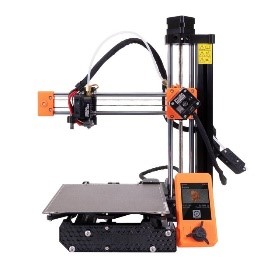
Original Prusa MINI+ with printing dimensions 180 x 180 x 180 mm
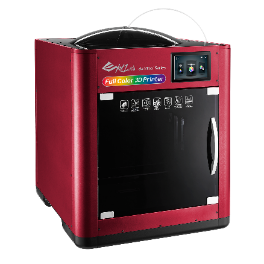
XYZ Printing Da Vinci Color capable of coloring 3D prints with printing dimensions 200 x 200 x 150 mm
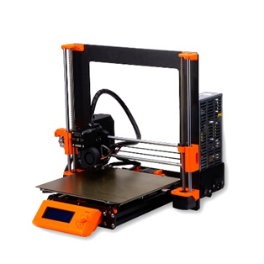
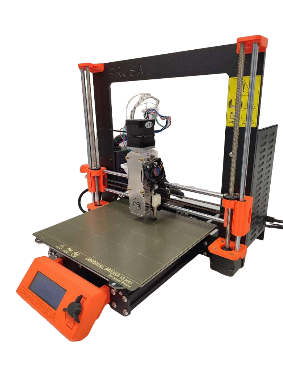
Original Prusa i3 MK3S+ with printing dimensions 250×210×210 mm
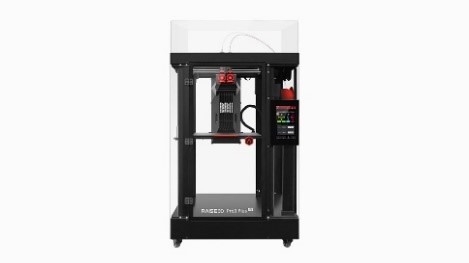
RAISE 3D PRO3 PLUS with printing dimensions 300 × 300 × 605 mm
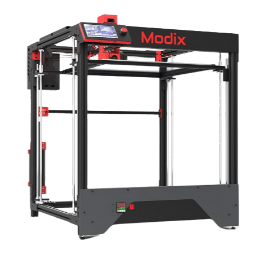
MODIX BIG 60 V3 with printing dimensions 600 x 600 x 600 mm
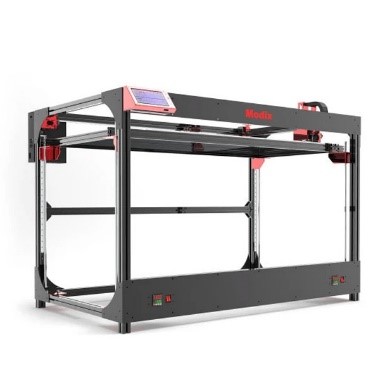
Modix BIG-120X with printing dimensions 1200 x 600 x 600 mm
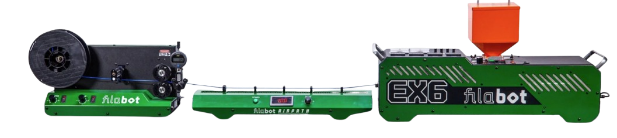
These 3D printing systems are supported with an end-to-end circular economy system of producing filament for FDM 3D printing from industrial and urban polymer waste named as Filabot EX6 Extruder Setup.
FGF (Fused Granular Fabrication) and FPF (Fused Particle Fabrication) are additive manufacturing processes similar to Fused Filament Fabrication (FFF) but use granular or powdered feedstocks instead of filament. Both technologies aim to broaden the material options for 3D printing, reduce material costs by using raw thermoplastic granules or particles and boost the circular economy aspect of 3D printing. In AMU, a modified Original Prusa i3 MK3S+ integrated with a Mahor·xyz V4 Pellet Extruder has been set up to offer this capability and produce specimens with maximum dimensions of 250×210×210 mm.
Composite Fibre Coextrusion (CFC)
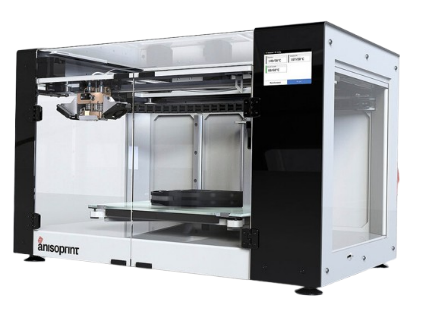
Composite Fibre Coextrusion (CFC) is an advanced additive manufacturing technique designed to produce composite materials with high strength, low weight, and tailored mechanical properties. It integrates continuous fiber reinforcement directly into a polymer matrix during the extrusion process, creating components with superior structural performance. AMU is equipped with the state-of-the-art ANISOPRINT COMPOSER A3 CFC 3D printer with printing dimensions of 460 х297 х 210mm.
Liquid Deposition Modelling
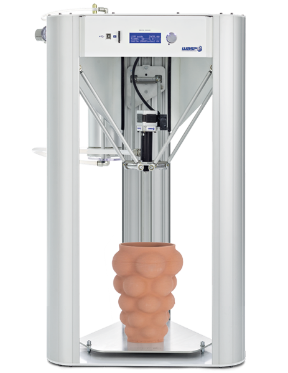
Liquid Deposition Modeling (LDM) is an additive manufacturing (3D printing) process in which a viscous material, typically in liquid or semi-liquid form, is extruded layer by layer to create a three-dimensional object. The technique is particularly suited for materials that are difficult to process using traditional filament-based methods, such as ceramics, cement, wood, biopolymers, etc. AMU has the novel DELTA WASP 2040 CLAY LDM 3D printer capable of producing products with dimensions of ⌀200 x 400 mm.
3D Bioprinting
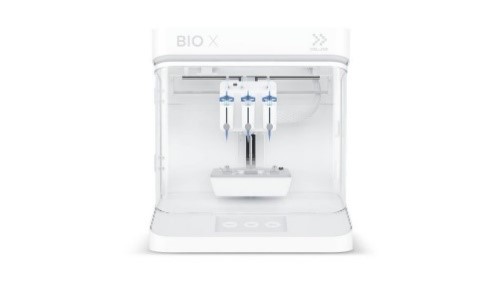
3D Bio-printing Technology allows the 3D printing of biological prototypes, by utilizing material extrusion technology and bioinks as raw material. The user selects and places the appropriate building platform (e.g. petri dish), and then a moving nozzle, extrudes and deposits each cross-sectional layer of the model successively. Subsequently, the building platform moves in the z-axis, and a new layer of material is deposited each time through the nozzle. The process is repeated until the desired 3D model is completed. AMU possesses the cutting-edge 3D bioplotter Cellink Bio X with printing dimensions of 130 x 90 x 70 mm.
Selective Laser Sintering (SLS)
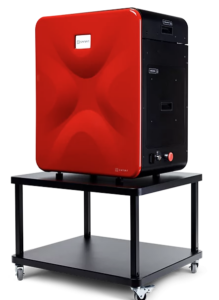
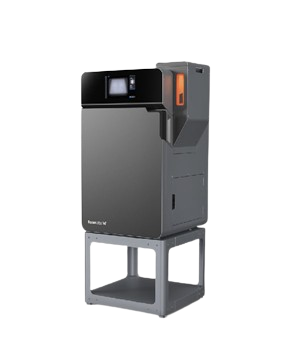
Uses a high-power laser to sinter small particles of powdered material. A laser beam scans the surface of the powdered material and selectively sinters the powder to form a solid cross-section of the desired model. The process is repeated until the final 3D object appears. SLS provides high durability, satisfactory mechanical properties and the creation of geometric complex models without the need of support structures. The technology is ideal for the manufacturing of functional parts and assemblies. AMU possesses two SLS 3D printers capable of producing high-fidelity products. In detail, the available SLS 3D printers are:
Lisa SINTERIT with printing dimensions 110 x 160 x 130 mm
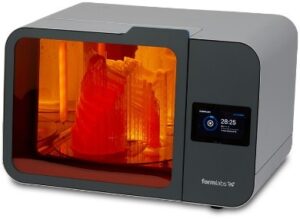
FORMLABS FUSE 1+ with printing dimensions 165 x 165 x 300 mm
Selective Laser Melting (SLM)
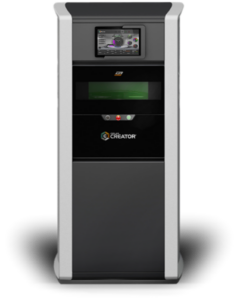
A laser-based 3D printing technology. The tank containing the powder is lifted, revealing a thin layer of metal that is spread over the building platform. After melting the first layer, a new prescribed dose of powder is applied to form the next layer of the desired part. SLM products present excellent mechanical properties and are used in the most demanding applications. AMU is equipped with the high-end 3D metal printer ORLAS CREATOR with printing dimensions of ⌀100 x 110 mm mm.
Stereolithography (SLA)
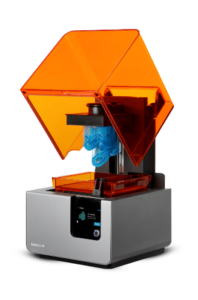
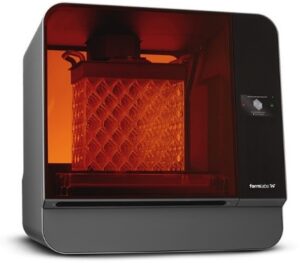
One of the most common AM processes for building parts, prototypes and patterns by focusing an ultraviolet (UV) laser on a vat of photopolymer resin. The vat contains the liquid polymer with a movable platform within. The resin hardens where the laser hits the surface, revealing layer-by-layer the final object. SLA is characterized by high dimensional accuracy and smooth surface finish. AMU possesses two SLA 3D printers capable of producing high-fidelity products meeting the high standards of medical and dental products. In detail, the available SLA 3D printers are:
Formlabs Form 2 with printing dimensions 145 × 145 × 175 mm
Formlabs Form 3BL with printing dimensions 335 × 200 × 300 mm
Along with these novel SLA 3D printing systems, AMU is equipped with the necessary machinery for the complex post-processing procedure of the 3D printing process that utilizes photopolymer resin as feedstock materials. More specifically:
Formlabs Form Cure L (⌀ 395 x 320 mm ) for optimum solidification of the resin and maximum mechanical properties
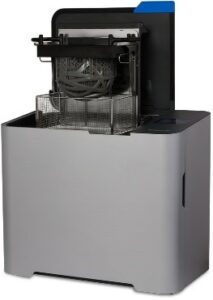
Formlabs Form Wash L (335 × 200 × 300 mm) for complete removal of liquid resin remains and supports
Multijet Process (MJP)
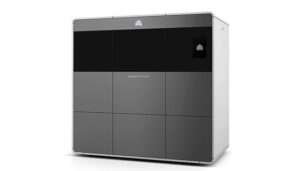
Applies inkjet technologies to create physical 3D models. Droplets of photopolymer material (resin) are selectively deposited on the building platform by the binder printing head, which moves in two directions. The polymer solidifies by utilizing ultraviolet light. The building platform lowers to the next layer and the process is repeated producing the model. MJP parts provide high resolution and dimensional accuracy, high surface quality, as well as the ability to use multiple materials in the same component. AMU is equipped with the ProJet MJP 5600 3D printer with printing dimensions of 518 x 381 x 300 mm and accuracy that reaches up to 13μm.
PCB 3D printing
The offered PCB 3D printing is ideal for creating double-sided printed circuit boards (PCBs). This PCB 3D printing technology allows you to create multilayered rigid and flexible circuit boards on FR-4, Kapton, or any plastic substrate of your choice by printing conductive and insulating inks on them. In AMU, there are the following two systems that can 3D printed PCBs:
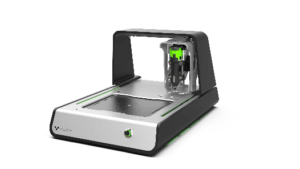
Voltera V-One with printing dimensions of 114 x 127 mm
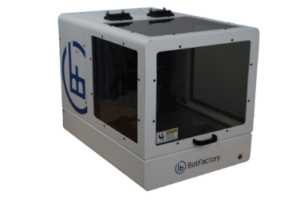
BOTFACTORY SV2 – Professional with printing dimensions of 117 x 140 mm